Therapy for coming
home to yourself.
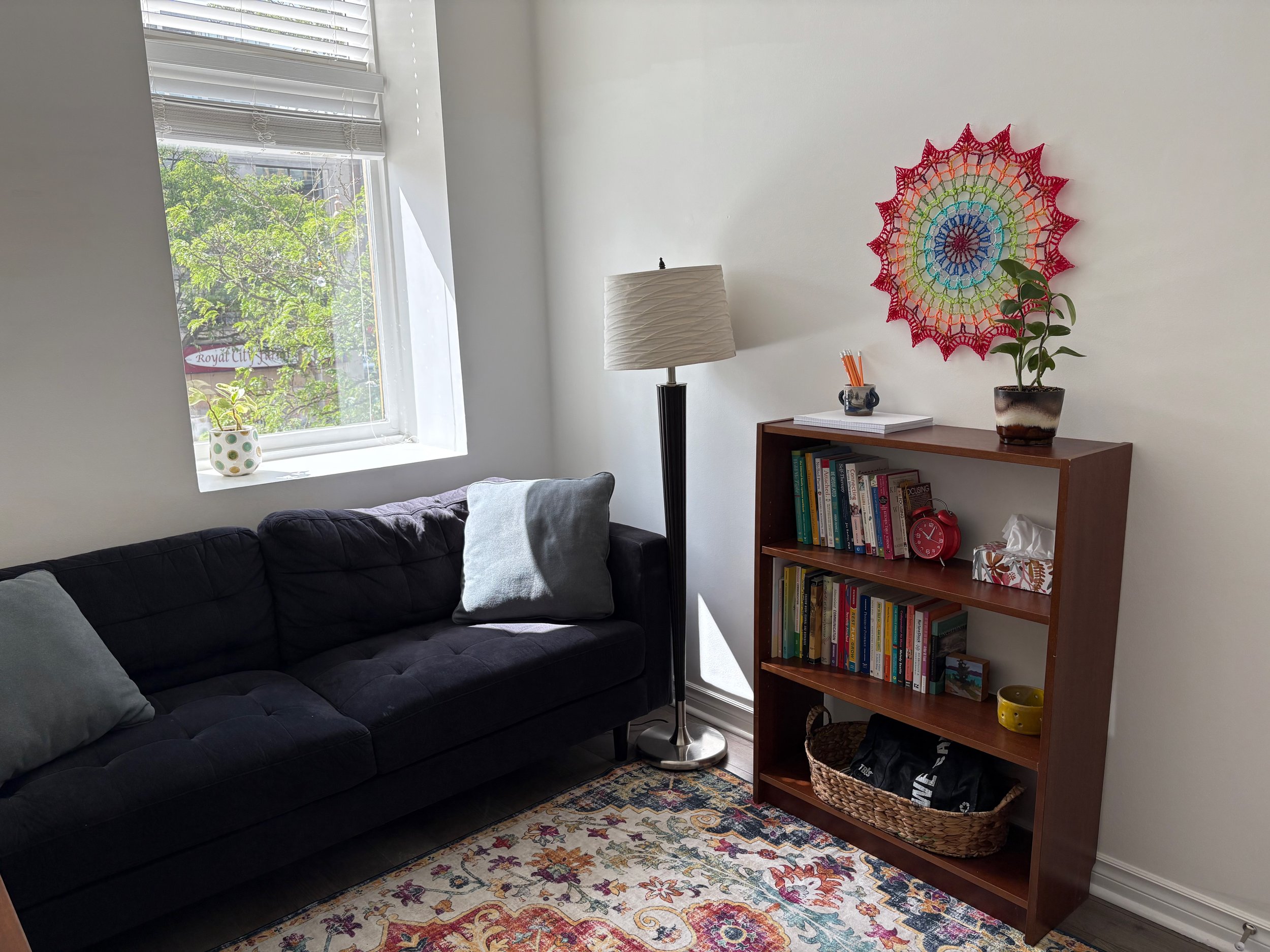
You might feel stuck, small, or unsure of who you really are. You’re exhausted by anxiety, people-pleasing, or just surviving. Something’s missing, but you’re not sure what.
Over the last 20+ years, I’ve supported youth, queer and trans folk, and gender-based violence survivors using an integrative feminist, trauma-informed, emotion focused (EFT) approach. Now, I bring that experience to my own communities, supporting queer, trans, and neurodivergent adults navigating trauma, identity, and the impact of feeling unseen or misunderstood. As a queer, neurodivergent trauma survivor, I get how hard it can be to prioritize your own healing. My goal is to create a space where you can show up as your whole self.
I believe you don’t need to stay stuck in survival mode. We’ll work together to make sense of what brought you here, understand the patterns that helped you survive, and work toward a life that feels more true to you. Using humour and embodied practices, we’ll work to shift patterns in your nervous system, reclaim your voice, and align your life with your values. Together, we’ll gently uncover the parts of you that got pushed aside, and start rebuilding a life that fits.
I practice from
an integrative
feminist
trauma-informed
& emotion focused
framework
Feminist therapy ties individual struggles to history and to larger systems and structures. It says “You are not fucked up. You are having a normal reaction to a fucked up situation.”
Trauma therapy pulls nervous system habits into the conversation. Whether it’s a specific event, an early childhood pattern of attachment rupture, developmental neglect or abuse, or a combination of these, trauma-informed approaches help us to unpack and shift the ways we have learned to survive, so that we can move out of trauma coping and show up the way we want to in the world and our relationships.
Emotion focused therapy (EFT) recognizes emotion as a primary way of interacting with the world. A humanistic, embodied approach, EFT assumes we are all doing our best, and gives tactics for feeling into our surface (called “secondary”) emotional reactions, so that we can recognize and explore the deeper (aka “primary”) emotions underneath. Working with the felt sensation of primary emotions can create powerful shifts in our understanding and behaviour.
Humans are powerfully adaptive creatures and our nervous systems have so many strategies to help us survive and cope with the oppressive systems and structures we exist in. I love how these three modalities combine to support deep change, while recognizing the fundamental power and skills of my clients.
Your Questions, Answered
-
There’s no hard-and-fast answer when it comes to how often we meet. The frequency of sessions can shift depending on where you are in your healing, your goals, your budget, your availability, and what’s happening in your life.
I often recommend starting with weekly sessions as we get to know each other and begin to build a foundation for the work. Once we have established our work together, many clients move to biweekly sessions as we continue working toward the goals that brought them to therapy. We can also revisit the frequency of sessions along the way and adjust as your needs change.
Longer term clients might book monthly or bi monthly sessions as a kind of mental health check-in. When you’re ready to stop, we can work through the closure together. You will always be welcome when life brings new challenges to process.
-
My in-person and virtual rate is $180 for a 50 minute session. This rate reflects my education and experience. I also intentionally maintain a limited caseload so that I can be fully present with each client and bring the time, attention, and care that our work together deserves.
Choosing to begin therapy is a powerful investment in your health, your relationships, and your life. As a consumer of therapy for 20+ years, I recognize not only the massive impact that it can have, but also that not everyone has the funds to access this powerful tool.
I am currently working on connecting with external funds to allow me to deeply subsidize, and in some cases cover, the cost of sessions for individuals who are low income and facing structural and systemic barriers to healing work.
-
As a registered social worker, both my one-on-one therapy and group services are covered by most major insurance companies. At this time, I am not able to bill direct to insurance; however I issue receipts for reimbursement immediately upon billing.
If you have questions about your insurer’s coverage, or need information about my licensing and/or scope of practice, please get in touch and I would be happy to get you whatever information you need.
-
I am currently licensed and insured to practice virtually and in-person in Ontario, and to provide virtual services to individuals residing in Quebec.
-
Getting started is as easy as a free 15 minute phone or video call. You can reach out using my contact form, or book your free consultation directly using the link below.
Let’s chat and explore whether we would be a good fit to work together.